
Wedding band, venue & technical setup: what to clarify before booking
A wedding band works best when music, schedule and venue fit together technically. Power, space, setup time, volume limits, soundcheck, outdoor conditions and possible second performance areas should be clarified early.
This planning guide helps couples, wedding planners and venues understand which technical points should be discussed before booking or at the latest during detailed planning.
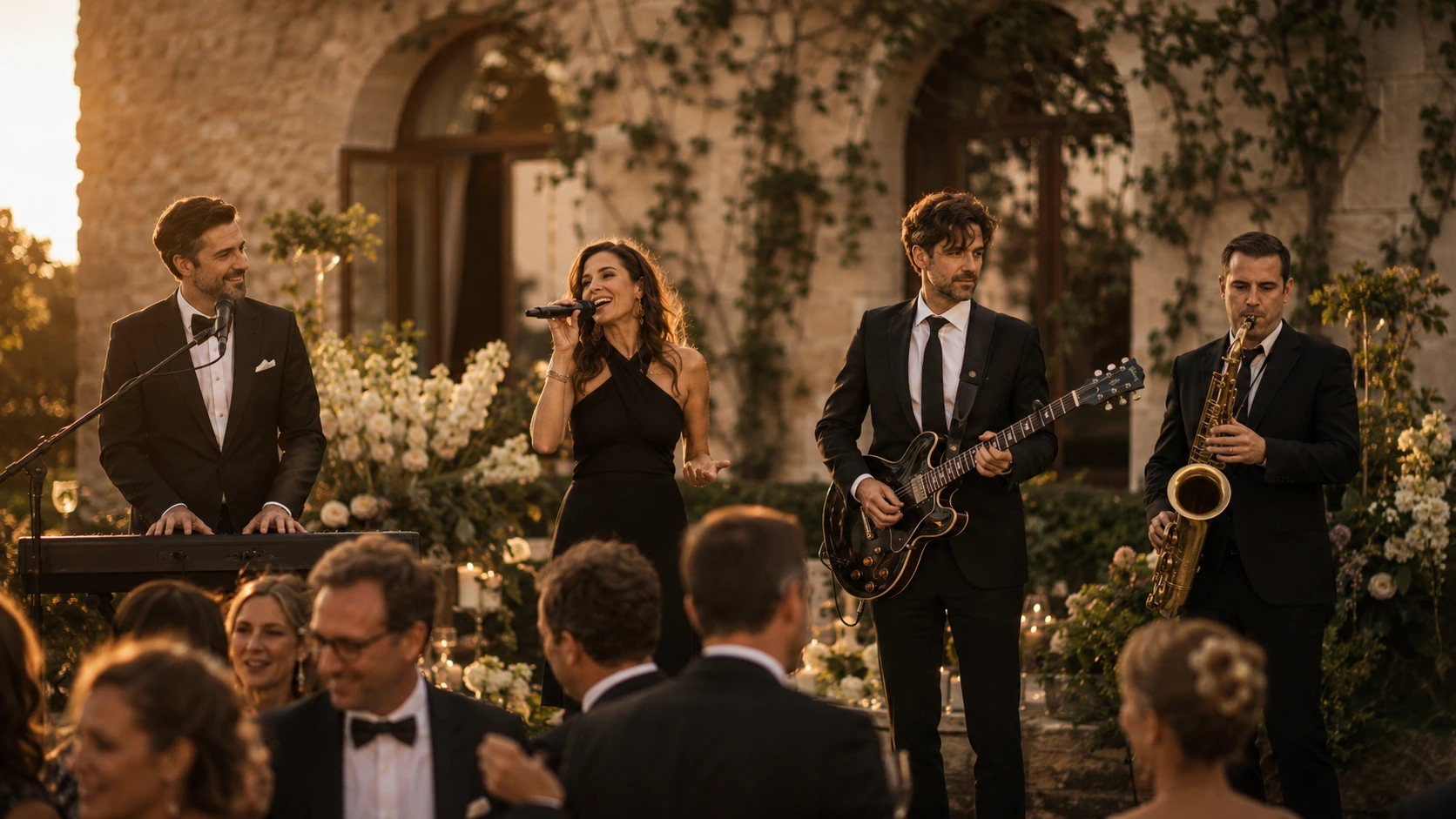
Short answer
Before booking a wedding band, clarify power supply, space requirements, stage or performance area, access, loading route, parking, setup time, soundcheck, volume limits, curfew, outdoor conditions and multiple performance areas with the venue.
Why this matters
Technical details may look small, but they determine how smooth the wedding day feels. If setup time, power or second performance areas are unclear, unnecessary stress can arise on the day.
1. Space, stage and performance area
A compact lineup with four or five musicians needs less space than a large event band with several voices, horns and additional technical equipment. The lineup should fit the room.
A stage is not always mandatory, but a clear, level and safe performance area is important. For balls, galas and larger weddings, an elevated stage can improve the impact.
Ideally, band, speakers and dance floor are connected. Too much distance reduces energy; too little space can limit technical setup and movement.
2. Power, cable routes and safety
The venue should know where power outlets and circuits are located. Larger sound or lighting setups may require separate circuits.
Cables should not run across guest paths, service routes or dance floors. Safe cable routes are especially important for outdoor setups and multiple performance areas.
A venue contact helps clarify power, in-house sound, lighting, microphones for speeches and setup times quickly.
If the venue provides sound or lighting, it should be clarified early whether it is suitable for live band, speeches, dinner and party.
3. Setup, soundcheck, access and parking
The band needs enough time for unloading, setup, cabling, soundcheck and visual setup — ideally before guests are in the room.
A soundcheck creates balanced sound and appropriate volume. If the room is already used for dinner, soundcheck needs especially careful planning.
Instruments and technical equipment are not carried like hand luggage. Short loading routes, access and parking reduce time and risk.
4. Volume limits, curfew and neighbours
Some venues have decibel limits, limiters or specific rules for music after a certain time. These details should be known before finalising the schedule.
If only quiet music is possible after 11 p.m. or midnight, the strongest live-band phase should be planned earlier.
High ceilings, glass, stone floors and vaulted rooms sound different from dampened ballrooms. A professional band considers room acoustics and volume.
Hotels, city venues and wineries may require consideration for neighbours or other guests. This should not become a surprise during the party.
5. Outdoor ceremony, reception and second sound system
Yes, if weather protection, power, stable ground, safe cable routes and a bad-weather plan are available. Direct sun, rain, wind, cold and humidity can affect instruments and equipment.
If ceremony or reception are separate from the later party area, a small second sound system or mobile setup can be useful.
Allow enough time between ceremony, drinks, dinner and party. Without a second setup, changeovers can affect the schedule more strongly.
Wireless microphones or additional inputs may be needed for speeches, planners, celebrants or programme items. This should be coordinated in advance.
Venue and technical checklist
- Which lineup and performance area are planned?
- Is there a stage, dance floor and enough space for equipment?
- Where are the power outlets and which circuits are available?
- When can the band set up and when is soundcheck possible?
- How do access, loading route, lift, stairs and parking work?
- Are there volume limits, limiters, curfew or neighbour restrictions?
- Is any part of the wedding outdoors and is there a bad-weather plan?
- Are there multiple performance areas such as ceremony, reception, dinner and party?
- Who is the venue contact on the event day?
- Are microphones needed for speeches, ceremony or moderation?
How The Jetset Society plans these points
Depending on the event, sound, lighting, setup, soundcheck, teardown and technical requirements are considered in offer and detail planning.
Power, performance area, setup time, volume, access and venue contact can be coordinated with the venue or planning team in advance.
The lineup is chosen not only by music style, but also by room size, stage, guest count, schedule, desired impact and budget range.
Next steps
Checklist for lineup, repertoire, pricing, contract and planning security.
The process from enquiry and offer to booking, technical setup and soundcheck.
Integrate song choice, live version, timing and party transition into musical and technical planning.
Plan multiple performance areas, second sound system, volume and music phases.
The full overview of music phases, schedule, pricing and enquiry.
Frequently asked questions
What should be clarified with the venue before booking a wedding band?
Important points include power, stage or performance area, access, loading route, parking, setup time, soundcheck, volume limits, curfew, outdoor conditions, venue contact person and possible second performance areas.
How much space does a wedding band need?
It depends on the lineup. A compact band needs less space than a large lineup with several voices, horns and additional technical setup. Safe performance area, power, monitoring and freedom of movement matter.
Can a wedding band perform outdoors?
Yes, if power, weather protection, stable ground, safe cable routes and a realistic bad-weather plan are available. Direct sun, rain, wind, cold and humidity can affect instruments and technical equipment.
Do we need a second sound system for ceremony and party?
If ceremony, reception or drinks are in a different area from the later party, a second or mobile sound system can be useful. This should be planned early to avoid disruptive changeovers.
Why is a soundcheck important?
A soundcheck before guests arrive supports balanced sound, suitable volume and less stress during the event. It should be coordinated with setup time and the venue schedule.