
Booking a band for a ball: checklist for balls, school balls and formal dance events
A ball places greater demands on the music than a regular party. Opening, formal dances, key moments, midnight show and late-night party sets all have to work together.
What should you clarify before booking a live band for a ball or formal dance event? This guide walks organisers, committees and companies through it. The Jetset Society plays balls mainly in Vienna, Lower Austria and Burgenland. The event partners and venues page gives an overview of venues and suppliers across these regions.
Short answer
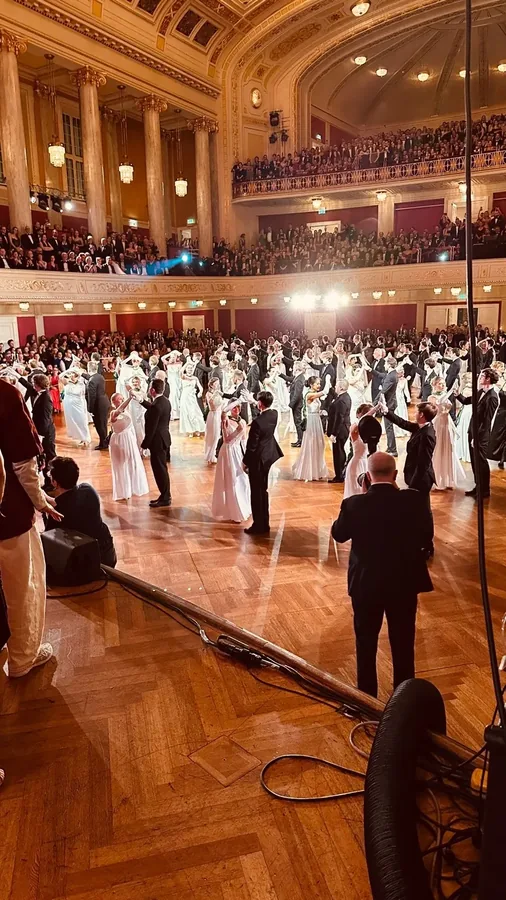
A good ball band does more than play danceable songs. It understands the whole arc of the evening: reception, opening, waltz, formal dances and key moments in the programme. Then come the midnight show and the shift into a modern party.
Who is this checklist for?
For ball committees, schools, companies, associations and organisers. For anyone, in fact, who wants a professional live band for a ball, school ball, gala ball or formal dance event.
Special considerations for school balls
Mixed audience
The music should appeal to students, parents, teachers, guests of honour and friends alike – without losing the ball’s formal character.
Committee and schedule
Discuss the opening, welcome, scheduled elements, raffle, midnight show and later party phase with the band early on.
Budget and package scope
Committees should know exactly what is included. That means lineup, performance time, technical setup, setup time, soundcheck, teardown, travel and possible extensions.
Venue and technical setup
A school assembly hall, a civic hall, a ballroom or a multi-purpose venue all make different demands. Stage, power, access, parking, lighting, volume and soundcheck each need a check of their own.
1. Schedule and musical arc
Reception and arrival
The start often calls for elegant, subtle live music. It sets a refined tone without getting in the way of conversation, arrivals, photos or greetings.
Opening and first rounds of ballroom dancing
The opening needs clear musical cues and clean transitions. The band must handle waltz, formal dances and key moments in the programme.
Midnight and party phase
After midnight, the music can often turn more modern and energetic. The shift from formal ball to full dance floor should feel natural.
2. Formal dances, repertoire and party sets
Standard and Latin dances
Waltz, foxtrot, cha-cha-cha, rumba or discofox can be relevant depending on the event. Clarify which rounds of ballroom dancing really matter.
Modern live repertoire
Many balls later need pop, soul, rock, current hits and party classics. A broad repertoire keeps the dance floor alive after the formal opening.
Know the audience
A school ball, company ball and gala ball have different audiences and expectations. The music should serve the guests without losing the character of the event.
Explore the repertoire and live impressions.
3. Stage, sound, lighting and hosting
Stage and dance floor
Stage space, sight lines, dance floor, power and cable routes influence setup, sound and visual impact. Even small details such as load-in routes and parking can matter on the night of the ball. The Jetset Society brings sound and lighting scaled to the room; where the hall already has a suitable system, that one is used instead. The venue provides the stage, power supply and load-in access.
Microphones and programme items
Speeches, awards, announcements, raffle or midnight show need clear technical roles. Microphones and transitions should be agreed with the band, the technical crew and whoever is hosting.
Curfew and volume
Ball venues often have curfews, volume limits or neighbourhood restrictions. Clarify them before you book.
For technical detail questions, the venue & technical setup page is a useful companion – many points apply to balls as well.
4. Lineup and budget
Which band size fits?
Smaller lineups may suit compact events. Large balls, graduation balls and gala balls often benefit from more vocalists, horns, greater dynamics and visible stage presence.
Calculate realistically
Performance time is only one part of the budget. Setup, soundcheck, teardown, technical setup, travel, coordination and the booked lineup also matter.
More guidance: Which band size fits? and Pricing.
Planning in three steps
1. Sketch the schedule
Rough out the reception, opening, rounds of ballroom dancing, programme items, midnight show and party phase.
2. Check room & technical setup
Clarify stage, dance floor, power, setup time, soundcheck, microphones, volume limits and curfew with the venue.
3. Align lineup & budget
You will receive a recommendation for a compact, medium or larger lineup. It depends on the number of guests, room size and the atmosphere you want.
Checklist before booking
- When do doors open, and when do the opening and the party phase start?
- Which dance styles and formal rounds of ballroom dancing are required?
- Is there an opening committee, choreography, a midnight show or an MC?
- How large are the hall, stage and dance floor?
- Which sound and lighting system is available at the venue?
- Who is the technical contact at the venue?
- Are there any curfews, volume limits or venue restrictions?
- Which audience should the music serve?
- Should the band cover dinner, opening, rounds of ballroom dancing and party?
- Which price range and lineup size are realistic?
- How much lead time is realistic? For popular ball dates, 6 to 12 months is ideal. Short-notice enquiries are worth making too: if the date is free, a great deal can still be planned properly.
How The Jetset Society performs at balls
Understanding ball formats
We plan the music around the reception, the opening, rounds of ballroom dancing, key moments and the late-night party.
Flexible lineups
The lineup ranges from a compact live band to a larger lineup with more vocals and instruments. We match it to hall, budget and the energy you have in mind.
Professional coordination
We coordinate schedule, technical setup, soundcheck, announcements, special requests and transitions before the event.
Next steps
The service page for balls, school balls and formal dance events.
Guide ranges by lineup size, plus the factors behind the price.
Videos of The Jetset Society at balls and graduation balls, with full dance floors and larger lineups.
Technical checklist for power, stage, volume, load-in and soundcheck. Many points also apply to balls.
Send date, venue, number of guests, schedule and desired lineup.
By Thomas Gindl – bandleader of The Jetset Society
A ball evening with a live band: example timeline
- 7:00 pm – Doors and reception: a discreet lounge or jazz lineup in the foyer · conversation level
- 8:00 pm – Opening: the committee processes in, débutantes take the floor, opening waltz · medium level
- 8:30 pm – First dance sets: ballroom standards in rotation – waltz, foxtrot, cha-cha-cha · medium level
- 10:00 pm – Programme items: awards, speeches or a show act, with quieter sets in between · conversation level
- 12:00 am – Midnight show: the musical highlight of the evening · medium to dancing level
- 12:30 am – Party: the full band takes over the dance floor · dancing level
- 2:00 am – Winding down to the curfew: a final live set or a suitable follow-on · dancing level, easing off towards the end
Every ball runs differently – the timeline is a proven framework that we adapt together to your programme and your venue’s curfew.
Frequently asked questions
What should we clarify before booking a band for a ball?
Clarify date, venue, number of guests, room size, stage, opening, rounds of ballroom dancing and midnight show. Add desired styles, technical setup and curfew. Also agree whether one live band should cover dinner, formal dances and the party.
Can one band play formal dances and modern party music?
Yes, provided the band understands the character of a ball. It should move with ease from elegant dance music into modern live party sets.
Which lineup is suitable for a ball or school ball?
It depends on room size, number of guests, stage, schedule and the impact you want. Larger lineups provide more vocals, instruments, dynamics and stage presence. For balls with a formal opening and a large dance floor, a medium to large lineup has proved its worth.
How much does a live band for a school ball cost?
A full-evening booking for a graduation ball, school ball or formal ball depends on lineup, performance time, technical setup and venue. Setup, soundcheck and schedule play a part too. The pricing page provides guide ranges for typical evening events with 4 to 11 musicians.
Does a ball need its own sound and lighting setup?
Often yes. The key point is whether the venue’s own sound and lighting are sufficient, so clarify the technical side early: the stage, the room size, the compering, the opening, the dance floor and any additional performance areas.